
A dental implant estimate can look simple at first: one replacement tooth, one price. In reality, the final number reflects a sequence of decisions about diagnosis, surgery, materials, healing, and the restoration that will become part of your smile. That is why two people replacing the same number of teeth may receive very different treatment plans.
For Houston patients researching dental implants cost, the most useful question is not merely, “What is the advertised price?” It is, “What does the estimate include, and what does my mouth need for a predictable long-term result?” This guide explains the major cost factors, the difference between a single implant and a full-arch solution, and how to compare estimates without being distracted by an incomplete promotional number.
The Quick Answer: What Do Dental Implants Cost in Houston?
Uptown Cosmetic & Implant Dentistry’s published dental pricing guide currently lists a general range of $4,000 to $5,500 per implant. For patients replacing a complete arch, the same guide lists All-on-4 treatment at approximately $25,000 to $28,000 per arch. These figures are planning ranges, not universal quotes. Your actual fee can be lower or higher depending on the treatment required before, during, and after implant placement.
A single implant fee may reflect the implant post, abutment, custom crown, surgery, imaging, and follow-up care—or some of those items may be listed separately. Before comparing offices, ask for a written estimate that identifies each component. A lower headline price is not necessarily a lower total cost.
What Are You Actually Paying For?
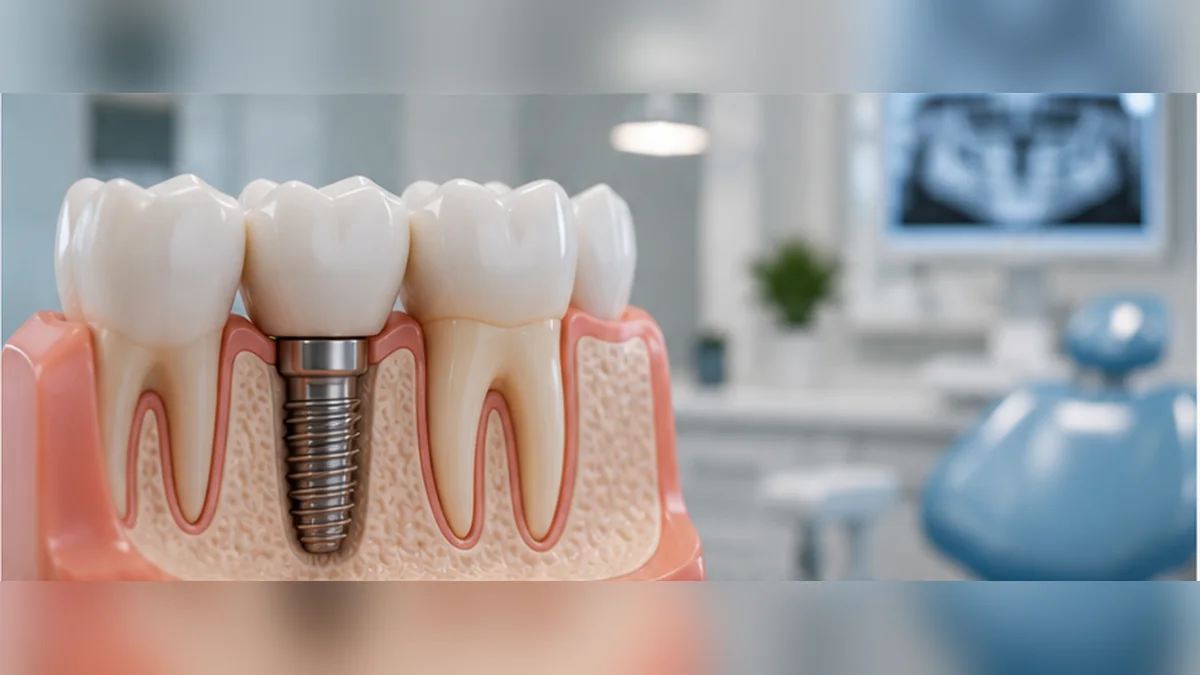
A dental implant is not one manufactured piece. It is a tooth-replacement system built in stages. The treatment commonly includes three primary components: a biocompatible implant placed in the jaw, an abutment that connects the implant to the restoration, and a custom crown designed to look and function like a natural tooth.
The diagnostic phase
Accurate implant planning begins with a dental examination, a review of your medical and dental history, and imaging. A two-dimensional X-ray may answer basic questions, while 3D dental imaging can show bone dimensions, nearby nerves, sinus anatomy, tooth roots, and other structures from multiple angles. This information helps the dentist plan implant position and identify whether additional treatment may be needed.
The surgical phase
The implant is placed into the jawbone at a carefully selected angle and depth. Surgical fees may vary with the complexity of access, the number of sites, the need for extractions, and whether grafting is performed at the same appointment. Medication, sterile supplies, surgical guides, and follow-up checks can also be part of this phase.
The restorative phase
After the implant integrates with the bone, a custom restoration is attached. For a single missing tooth, that restoration is usually a crown. Several implants may support a bridge, while a complete arch can be restored with a fixed prosthesis. The shape, shade, material, bite design, and laboratory work all affect the final fee. An on-site dental lab can give the clinical and laboratory teams closer control over fit, color, and customization.
Eight Factors That Change Dental Implant Pricing
1. The number of teeth being replaced
One missing tooth is a different project from three missing teeth or an entire arch. However, the cost does not always increase in a simple one-to-one pattern. Two or more implants may support a bridge, and full-arch systems can replace many teeth with a smaller number of strategically placed implants. The best design depends on bone, bite forces, spacing, and restorative goals.
2. Tooth extractions
If a failing tooth is still present, it may need to be removed before the implant can be placed. A straightforward extraction and a surgical extraction do not involve the same level of complexity. In selected cases, extraction, grafting, and implant placement can occur during one visit; in others, healing is intentionally staged.
3. Bone volume and grafting needs
Implants require a stable foundation. When bone has narrowed or lost height after tooth loss, a graft may be recommended to create adequate support. The graft material, size of the area, healing time, and whether a sinus lift is necessary can change both the treatment timeline and cost. Not every patient needs grafting, and a scan is often the clearest way to evaluate this question.
4. Gum health and infection
Active gum disease or infection around a failing tooth should be addressed before a definitive restoration is completed. Skipping disease control to reach the implant stage faster can compromise healing. Preliminary periodontal treatment may add to the initial investment, but it protects the foundation on which the implant depends.
5. The type of implant restoration
A single implant crown, an implant-supported bridge, a removable implant denture, and a fixed full-arch restoration solve different problems. Each requires a different number of components, laboratory steps, and clinical appointments. Patients considering dental implants in Houston should compare complete treatment designs rather than the cost of the implant screw alone.
6. Materials and customization
Implant components and restorations are available in different materials and designs. The final teeth must withstand chewing forces while also matching the color, translucency, contour, and proportions of the smile. Highly customized anterior work can require additional shade analysis and laboratory artistry because a front tooth must blend under many kinds of light.
7. Sedation and comfort options
Local anesthetic is commonly used during implant surgery. Some patients also benefit from sedation dentistry because of dental anxiety, a strong gag reflex, complex treatment, or the length of the appointment. The type of sedation selected and the monitoring required can affect the estimate.
8. The experience and coordination behind the treatment
Implant dentistry combines surgery, prosthetic planning, bite management, aesthetics, and long-term maintenance. Cost may reflect the training of the clinician, the technology used to plan the case, the quality of the components, and how closely the surgical and restorative phases are coordinated. A durable result depends on more than placing an implant in available bone; it depends on placing it where the final tooth can function correctly.
Single-Tooth Implant vs. All-on-4: Why the Costs Are So Different
A single-tooth implant cost usually centers on one implant site and one custom crown. The case may still require extraction, grafting, or temporary tooth replacement, but the restorative scope is limited to one area.
By contrast, All-on-4 dental implants are designed to restore a full upper or lower arch. The treatment can involve multiple extractions, four or more implants, a fixed temporary prosthesis, detailed bite records, and a custom final restoration. Comparing a per-implant figure with a per-arch figure is therefore misleading: they represent entirely different treatment goals.
A Simple Way to Compare Common Treatment Scopes
| Treatment scope | What may be included | Major cost variables |
| Single tooth | Implant, abutment and crown | Extraction, grafting, tooth location, material |
| Several teeth | Multiple implants or an implant-supported bridge | Number of sites, span, bone support, temporary teeth |
| Full arch | Implants, fixed temporary teeth and final prosthesis | Extractions, arch design, materials, sedation, complexity |
Does Dental Insurance Cover Implants?
Coverage varies widely. One plan may contribute toward the crown but not the implant surgery; another may apply an annual maximum to part of the treatment; some plans may exclude implants altogether. Medical insurance occasionally becomes relevant when tooth loss or reconstruction is associated with trauma or another covered medical condition, but this depends on the policy and documentation.
Ask the dental office for a written breakdown and a benefits check, but confirm important details directly with your insurer. Preauthorization is useful, yet it is not always a guarantee of payment. Your plan’s deductible, waiting period, missing-tooth clause, annual maximum, and network rules can all affect reimbursement.
Can Dental Implant Treatment Be Financed?
Many patients do not pay the entire treatment fee at once. The practice’s dental financing options may allow qualified patients to divide the balance into monthly payments through third-party healthcare lenders. Terms, approval criteria, interest, and promotional periods vary, so compare the total amount repaid—not only the monthly payment.
Financing does not make every treatment plan affordable for every household, but it can help patients avoid choosing an incomplete solution solely because it carries the smallest initial number. A financial coordinator can explain payment timing, deposits, insurance estimates, and which stages are due at different points in treatment.
Why an Advertised “Starting At” Price Can Be Misleading
Promotional pricing often describes one portion of an ideal, uncomplicated case. It may exclude the exam, scan, extraction, graft, abutment, temporary tooth, final crown, anesthesia, or follow-up care. Sometimes the price applies only to a specific implant brand or restoration material. None of these approaches is automatically improper—but the limitations should be easy to identify before you commit.
When reviewing an implant advertisement, ask these questions:
- Does the price include the implant post, abutment, and final crown?
- Are the examination and 3D scan included?
- What happens if an extraction or bone graft is needed?
- Is a temporary tooth or temporary arch included?
- Which restoration material is being quoted?
- Are sedation, medication, and follow-up visits separate?
- Who performs the surgery and who designs the final teeth?
- What maintenance or repair costs should I expect later?
How to Compare Two Dental Implant Estimates Fairly
The goal is not to choose the longest estimate or the most expensive office. It is to compare the same scope of care. Request an itemized plan and confirm whether both dentists are proposing the same number of implants, the same restorative design, similar materials, and the same preparatory procedures.
Also compare what happens after surgery. Who monitors healing? When is the final restoration delivered? Are bite adjustments included? What is the plan if the temporary tooth fractures or an implant does not integrate? Clear answers reduce the risk of unexpected decisions midway through treatment.
Are Dental Implants Worth the Investment?
Value depends on your health, goals, and available alternatives. A well-planned implant can replace a missing tooth without preparing the neighboring teeth for crowns. It can restore chewing support and help maintain bone in the area. For a full arch, fixed implant-supported teeth can offer stability that removable dentures cannot provide.
That does not mean implants are the only responsible choice. A bridge or removable prosthesis may be appropriate when surgery is not advisable, when anatomy limits implant placement, or when a patient’s priorities point toward another option. The most valuable plan is the one that addresses the actual diagnosis and can be maintained over time.
What Happens During a Dental Implant Cost Consultation?
A meaningful consultation should do more than quote a fee. The dental team will usually discuss your concerns, review your health history, examine the teeth and gums, and evaluate available imaging. When additional three-dimensional information is needed, a cone-beam scan can help measure bone and identify important anatomy.
You should leave with a clearer understanding of the recommended treatment, alternatives, major risks, likely timeline, and estimated cost. If the plan is complex, it is reasonable to take time to review it. Bring a written list of questions and ask for clarification whenever a line item or clinical term is unclear.
A Clearer Path to Your Personalized Implant Price
Online averages are useful for early planning, but they cannot show whether you need an extraction, graft, one implant, a bridge, or full-arch treatment. The next practical step is a diagnostic visit that connects the price to a specific clinical plan.
Uptown Cosmetic & Implant Dentistry serves patients from Uptown Houston, River Oaks, the Galleria, Memorial, Greenway Plaza, Kirby, Bellaire, and surrounding communities. To receive an individualized estimate, schedule a dental implant consultation and bring any recent X-rays, insurance information, and questions about financing or treatment timing.
Frequently Asked Questions
How much is one dental implant in Houston?
Uptown Cosmetic & Implant Dentistry’s published pricing guide lists a general range of $4,000 to $5,500 per implant. The final total depends on what the estimate includes and whether you need an extraction, grafting, sedation, or other care. A personalized exam is necessary before the office can confirm your price.
Why can two dental implant estimates be so different?
The plans may not include the same services. One estimate might cover only implant placement, while another includes imaging, an abutment, a custom crown, temporary teeth, grafting, sedation, and follow-up care. Implant brand, restoration material, laboratory work, clinician training, and case complexity can also influence the fee.
How much do All-on-4 dental implants cost in Houston?
The practice’s current pricing guide lists approximately $25,000 to $28,000 per arch for All-on-4 treatment. A complete quote depends on oral health, extractions, bone conditions, sedation, the temporary and final prostheses, and the materials selected. Financing may be available to qualified patients.
Medical note: This article provides general educational information and is not a diagnosis or a binding treatment estimate. Dental implant recommendations and fees must be based on an individual examination and treatment plan.
